
Boggle With Friends: Word Game
ZyngaWord
3.88.40K Reviews
- Version
- 19.1.1843
- Installs
- 1.00M
- Age Rating
- Everyone
Screenshots
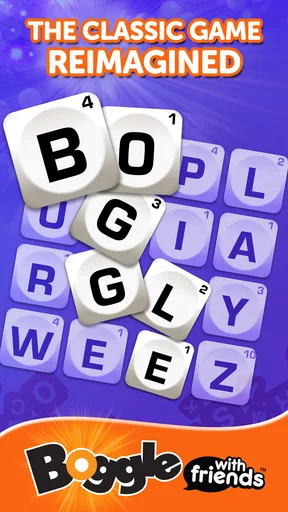
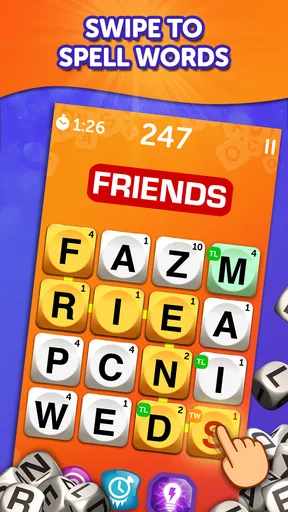
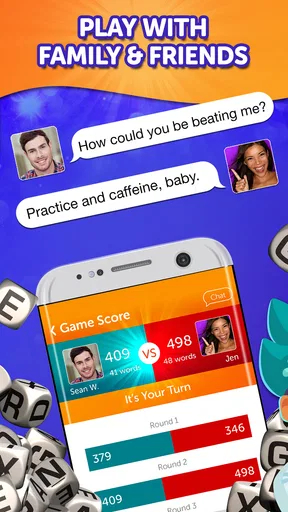
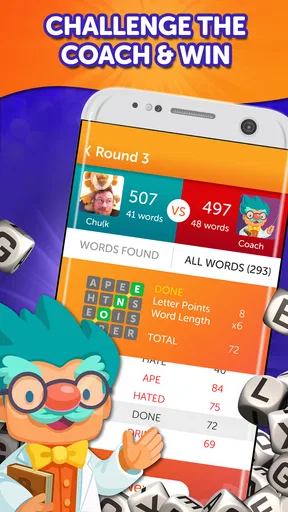
Our Review of Boggle With Friends: Word Game
 Analysis by Appyee
I like word games best when they fit into the small gaps in an ordinary day: a short break, a quiet moment in the kitchen, or a few minutes waiting for someone else to finish an errand. Boggle With Friends: Word Game suits that kind of stop-and-start play because its letter-search challenge is easy to understand but still rewards a quick eye and a bit of practice. It is a word game from Zynga, and its familiar Boggle-style idea makes it approachable even if you have not played this particular app before.
The household angle is where I think it can be especially useful. One person can pick it up for a solo puzzle while another is nearby, then the game can become a light conversation starter: “Did you spot that word?” It is less of a shared-screen board game than a way for people to take turns playing on their own devices or compare how they approach the same kind of word hunt. If everyone wants to sit together and make moves on one screen, a physical word game may work better.
A small break that can become a friendly challenge
A realistic use case is a family member waiting for dinner while someone else finishes cooking. A quick round gives the player something focused to do, and the word grid is simple enough that a nearby person can suggest a possible path without needing a long explanation. I would treat that as informal play rather than assume the app is designed for a shared-device pass-around session. People may have different preferences for who gets to use a phone, and keeping each person’s play separate is the least confusing approach.
For a quiet solo moment, the appeal is different. I can concentrate on scanning the letters, then use a round as a small mental reset from scrolling or checking messages. The main trade-off is that timed word searching can feel more like a test than a relaxing puzzle. If you want an unhurried activity where you can leave and return without pressure, a crossword or a leisurely word search may suit you better. This game is a stronger fit when you enjoy reacting quickly and trying to improve your own spotting habits.
Keep accounts and shared devices uncomplicated
The published description of the app offers sign-in choices as well as guest play, which can help a household decide how much identity to attach to a session. On a device used by several people, I would pause before signing in with a personal account and make sure the person playing understands whose account is active. Guest play can be a simpler starting point when someone only wants to try the game, while an individual account is more appropriate when the player wants their own identity in the game. That distinction matters more than trying to make one profile serve everyone.
Shared phones and tablets can blur boundaries: a child may open the app while an adult is signed in, or one person may accidentally continue another person’s session. I would make a clear household habit of checking who is using the device before playing and signing out or switching users where appropriate. I would not assume that the game provides family profiles, parental controls, or a way to separate several people’s progress automatically. If account separation is important, use the device’s own user-management options where available and decide in advance whether the app is for one person or occasional guest play.
Choosing how to compete together
There is a useful difference between playing near someone and coordinating through the game. The original Boggle idea gives people an easy shared reference point, but a player’s score or progress is not the same as a household-wide activity. Before inviting a friend or relative, I would agree on what “playing together” means: taking turns, comparing results after separate rounds, or using the social features described in the app. That simple agreement avoids the awkwardness of one person expecting a cooperative game while another expects a contest.
For a casual challenge, a good approach is to keep the stakes low and focus on the words people noticed. Someone who is new to the game can explain their thinking aloud, while a more experienced player can share a scanning tip without turning the round into a lesson. I find that this makes it more welcoming for mixed skill levels. If a player finds leaderboards or competition discouraging, there is no need to make them the center of a household session; solo play is a perfectly reasonable way to enjoy the word search.
Age, spending, and trust
The game is rated for Everyone, so its word-puzzle premise is suitable for a broad age range. That rating does not mean every household will want children using social or purchase-related parts of an app without supervision. I would explain the difference between playing a free game and choosing an in-app purchase, especially on a device where payment details may already be available. The game is free to download, with optional in-app items priced from $0.99 to $99.99 each, so a parent or device owner should set expectations before handing over a shared phone.
For younger players, I would also keep the first session simple: try the basic word-finding activity together, see whether the pace feels comfortable, and decide whether the social side is something the child should use. I would not treat a general age rating as a substitute for a family’s own rules about chatting, accounts, or spending. For adults, the same practical check applies on a shared device: make sure purchases are intentional and that the person playing knows which account, if any, they are using.
Getting Started with Boggle With Friends
Jumping into Boggle With Friends is as easy as pie. Once you've downloaded the app, you can sign in with Facebook, email, or just play as a guest. The interface is super intuitive, making it a breeze to navigate. You'll find yourself quickly immersed in a sea of letters, ready to be transformed into words. Trust me, it’s like a word nerd’s paradise!
Gameplay and Features
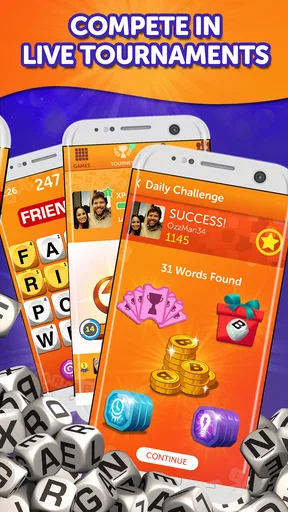
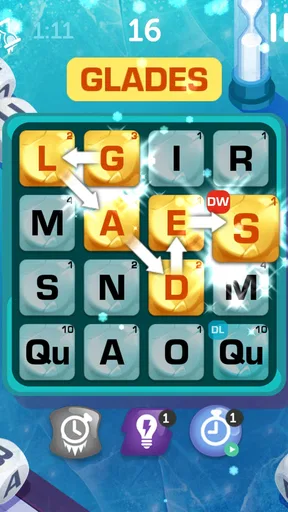
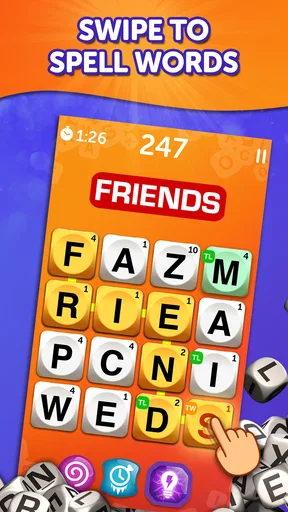
At its core, the game retains the essence of traditional Boggle, where you connect adjacent letters to form words. But wait – there’s more! The app spices things up with a variety of game modes. You can play solo, challenge friends, or even dive into tournaments. The thrill of beating the clock while finding the longest word possible is something I absolutely love.
One of my favorite features is the Daily Challenge. It offers fresh puzzles every day, keeping the game dynamic and exciting. Plus, the app rewards your progress with coins and achievements, adding an extra layer of motivation. It’s like they say, "Variety is the spice of life," and this game delivers just that!
Social Connection and Competition
What’s a game without a little friendly competition, right? Boggle With Friends lets you connect with friends and family, or even make new friends through the game’s social features. You can chat, send gifts, and engage in friendly banter while battling it out for the highest score. The leaderboard feature is a fantastic way to see how you stack up against other players globally. It’s seriously addictive!
Design and User Experience
Visually, the app is a treat. The design is sleek and colorful, which makes for a delightful user experience. The graphics are crisp, and the animations are smooth, ensuring that nothing distracts you from your word-finding mission. The sound effects are subtle yet engaging, enhancing the overall gameplay without being intrusive. I found myself getting lost in the vibrant atmosphere of the game more times than I care to admit!
In-App Purchases and Monetization
Now, let’s talk about the elephant in the room: in-app purchases. While Boggle With Friends is free to download and play, there are options to purchase coins and power-ups. These can be handy if you’re looking to gain an edge in the game, but they're totally optional. I've managed to enjoy the game without spending a dime, so don’t fret if you’re on a budget. The app strikes a nice balance, allowing you to enjoy the core gameplay without feeling pressured to pay.
Where it fits among word games
Compared with a crossword, this is much more about quickly spotting combinations than patiently working through clues. A conventional word-search puzzle usually asks you to find words from a list, while Boggle asks you to discover them in a grid under time pressure. That makes it feel more reactive and replayable, but also less restful. I would choose it when I want a brief burst of concentration, and choose a crossword or an untimed puzzle when I want to settle in without a clock shaping the experience.
There is also a social difference from many solo word puzzles. The friend challenges and competitive elements give the game a reason to return to, but they can make comparison part of the fun whether or not you want it. If your goal is simply to build a calm daily habit, use the solo side and treat scores as personal benchmarks rather than proof of skill. If you want a word game built around long-form deduction, this is not a replacement for one; its pleasure comes from fast recognition and the satisfying feeling of tracing a word through neighboring letters.
Small habits that make rounds more satisfying
When I play, I try not to lock onto the first obvious word and stop scanning. I look for short words first, then revisit the same cluster of letters to see whether a different starting point opens a longer route. It is a useful way to use the board more deliberately, especially when a familiar word seems to dominate your attention. I also avoid tapping randomly just to keep moving; a quick, controlled scan tends to be more helpful than rushing through the grid without a plan.
The Daily Challenge can serve as a convenient routine when I want a defined reason to open the game, while friend matches make more sense when both players are available and actually want a contest. Those are different moods, and I would not force one to substitute for the other. If a session starts to feel frustrating, switching to a solo activity or stopping after a round is better than spending money in an attempt to rescue a result. The central skill is noticing words, not buying a shortcut to enjoyment.
Who should give it a try
I would recommend it to people who like Boggle’s core idea, enjoy quick rounds, and want an option that can be played alone or tied to friendly competition. It is also a reasonable pick for households with different ages, provided the device owner sets clear rules for accounts, social interaction, and purchases. The Everyone age rating and straightforward word-grid concept make the basic activity approachable, but a parent should still decide whether the app’s connected features are right for a child.
I would skip it if you dislike timed play, prefer puzzles with a single carefully reasoned solution, or do not want social competition in a game. Someone looking for a cooperative family activity on one shared screen may also be happier with a tabletop word game. And if a shared device is the only way to play, it is worth agreeing on whose session is active before anyone starts; the fun of a quick round is not worth confusion over profiles or purchases.
What to expect before installing
Zynga’s word game has a 3.8 average rating from around 26,000 ratings, with about 8,300 written reviews and over 1 million installs. It was released on March 15, 2017, and version 18.9.1754 requires Android 5.0 or later. Those details place it among established casual word games rather than a brand-new experiment, but I would still judge it by whether its pace and social approach suit you. The rating is a useful broad signal, not a promise that every player will enjoy timed rounds or competitive features.
For an everyday decision, the practical questions are simple: Can I play without paying? Yes, the game is free, and purchases are optional. Can I enjoy it on my own? Yes, solo play and the Daily Challenge give it a self-contained reason to open. Is it automatically a shared family profile? I would not assume that; decide whose account is in use and whether guest play is enough for a trial. Does it suit every word-game fan? No—its quick scanning is the point, so a slower, clue-led puzzle is a better match for someone who dislikes the clock.
Final Thoughts
So, is Boggle With Friends worth a download? Absolutely! It’s a fun, engaging, and challenging game that keeps your brain sharp and your competitive spirit high. Whether you’re playing solo or challenging friends, the app offers endless hours of entertainment. If you’re a fan of word games, give it a whirl – you won’t regret it!
And there you have it, folks! That’s my take on Boggle With Friends: Word Game. Go ahead, download it, and let your inner word wizard shine. Happy playing!
A household-friendly way to decide
My household verdict is that this works best as an individual game that can spark shared conversation, rather than as a substitute for a cooperative game night. One person can play while others watch, suggest words, or take their own turns later, but I would keep accounts and purchases clearly tied to the person using the device. That small bit of coordination makes the app easier to enjoy without assuming it has family-specific controls.
For a quick daily word challenge, it is an appealing choice; for an unhurried puzzle, a one-device group activity, or a child’s unsupervised social game, I would choose something else or set clearer boundaries first. The balance of solo play, word hunting, and optional competition is the reason I would keep it around, while the timed pace and need to manage shared-device expectations are the reasons it will not suit everyone.
Verdict
Strengths of Boggle With Friends: Word Game
- Engaging multiplayer mode enhances competition.
- Daily challenges keep gameplay fresh and exciting.
- Easy-to-use interface suitable for all ages.
- Variety of power-ups adds strategic depth.
- Offline mode available for uninterrupted play.
Limitations of Boggle With Friends: Word Game
- In-app purchases can be costly over time.
- Occasional lag in multiplayer games.
- Advertisements can be intrusive at times.
- Limited customization of game settings.
- Requires constant internet for some features.
Other Releases by Zynga
View All
CSR Racing
Racing3.6

FarmVille 2: Country Escape
Casual4.6

Classic Words With Friends
Word4.2

CSR 2 Realistic Drag Racing
Racing4.6
Similar Picks in This Category
View All
Word Search - Word Puzzle Game
Bluetile4.8

Word Search Quest - Puzzles
Blackout Lab4.8

CodyCross: Crossword Puzzles
Fanatee, Inc.4.7

Words of Wonders: Crossword
Fugo Games4.9

Wordscapes: Word puzzle game
PeopleFun4.7

Word Search Explorer
PlaySimple Games4.9
Frequently Asked Questions
What is Boggle With Friends: Word Game?
Boggle With Friends: Word Game is a fast-paced, multiplayer word game where players compete to find as many words as possible from a jumble of letters. It features vibrant graphics, engaging gameplay, and social elements such as leaderboards and chat. The game is available for both Android and iOS devices.
How does multiplayer work in Boggle With Friends?
In Boggle With Friends, multiplayer mode allows you to challenge friends or random opponents to see who can find the most words within a set time limit. You can play head-to-head matches or join tournaments for larger competitions. The game also provides options for rematches and tracking your progress against other players.
Are there in-app purchases in Boggle With Friends?
Yes, Boggle With Friends offers in-app purchases. Players can buy power-ups, additional game modes, or cosmetic items to enhance their gameplay experience. While the game is free to download and play, purchasing items may provide advantages or unlock premium features that enhance the overall experience.
Can I play Boggle With Friends offline?
No, Boggle With Friends requires an internet connection to play. The game’s multiplayer features and social interactions rely on being connected to the internet. However, there are some practice modes available that you can engage with while offline, but for full functionality, an internet connection is necessary.
Is Boggle With Friends suitable for all ages?
Boggle With Friends is generally suitable for players of all ages, offering an educational and entertaining experience. The game helps improve vocabulary and cognitive skills. However, parental guidance is suggested for younger players, especially if they are participating in online interactions or making in-app purchases.
Play our best games!


